
The biblical story of the kingdom · Essay 07
The King
and His People
From Joshua to David
How Israel received the land, passed through the crises of the judges, and came under the rule of David while the Lord remained its true king.
The Land Given
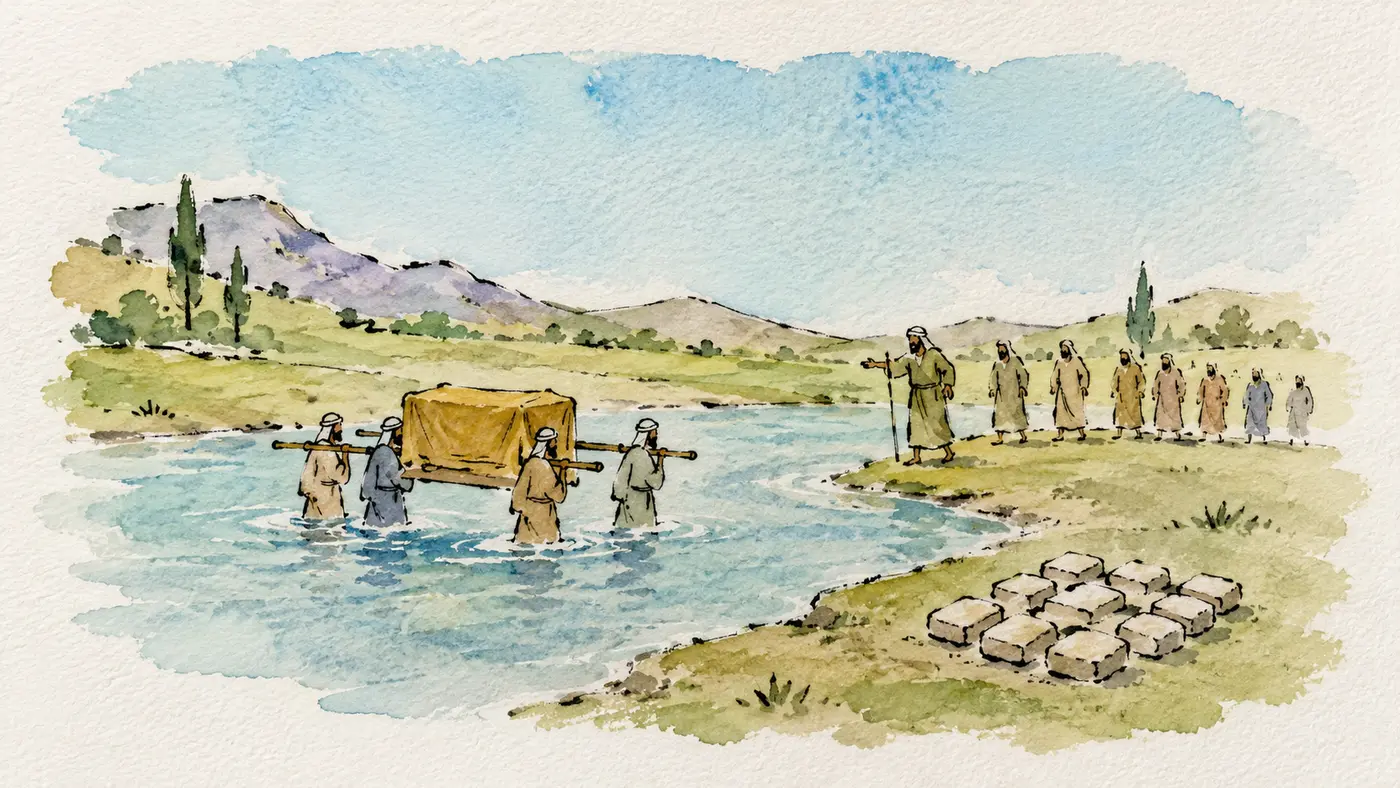
When Joshua led Israel across the Jordan, he was not founding a kingdom in the ordinary political sense. Israel already belonged to the Lord. God had delivered the people from Pharaoh, bound them to himself at Sinai, and placed his dwelling among them. He had declared them his “treasured possession among all peoples” and “a kingdom of priests and a holy nation” (Exodus 19:5–6). The entry into Canaan did not create the kingdom of God. It established his covenant people within the land he had promised them.
Joshua exercised considerable authority, but he was never Israel’s sovereign. Before the conquest of Jericho, he encountered the commander of the Lord’s army. When Joshua asked whether he had come for Israel or for its adversaries, the answer was simply, “No” (Joshua 5:14). Joshua then fell with his face to the ground and asked what the commander would say to his servant. Like Moses before the burning bush, he was told to remove his sandals because the ground was holy. The encounter placed Joshua’s leadership in its proper order: he did not command the Lord’s army but received his instructions from its commander. Israel’s victories would not be the achievements of an independent nation advancing its own ambitions. The Lord would fight for his people, and they would receive the land as his gift.
The conquest repeatedly demonstrated this order. Jericho fell when Israel obeyed instructions that offered little basis for military confidence. At Ai, hidden disobedience brought defeat. Israel’s security did not rest ultimately upon numbers, weapons, leaders, or fortifications. Israel prospered when the people trusted and obeyed the Lord.
Shiloh and the Covenant
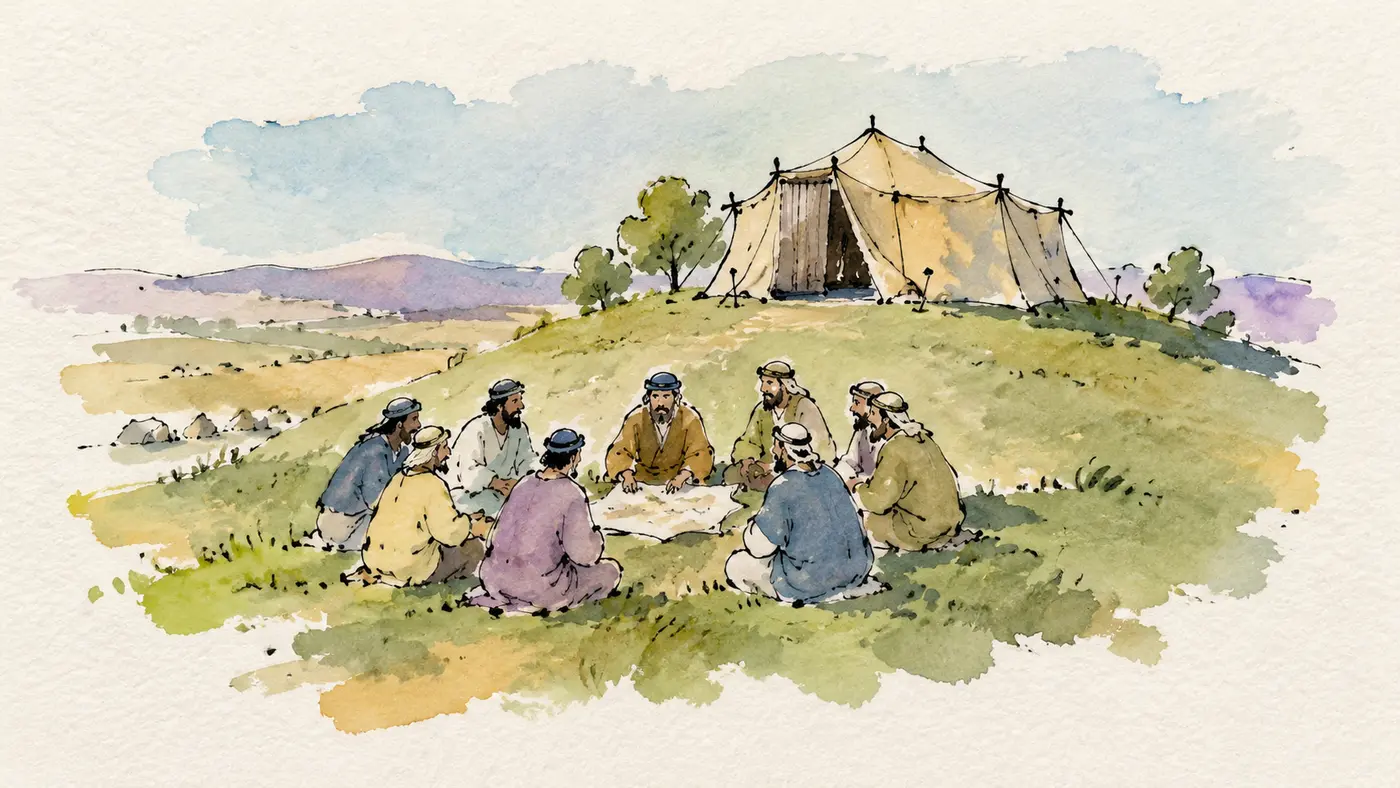
After the major campaigns had ended, the tribes gathered at Shiloh and set up the tent of meeting there (Joshua 18:1). From Shiloh the remaining portions of the land were allotted before the Lord. Israel had no royal city and no human dynasty, but it was not without a centre. The sanctuary represented the presence of the Lord among the people.
Before Jerusalem became the city of David, Shiloh served as the place where the tribes assembled and where the tent of meeting stood. Israel was a collection of tribes, but the tribes belonged to one God, lived under one covenant, and gathered before one sanctuary.
The book of Joshua closes on a note of genuine fulfilment. The Lord gave Israel the land and rest from surrounding enemies. “Not one word of all the good promises that the LORD had made to the house of Israel had failed” (Joshua 21:45). Yet at Shechem Joshua also called the people to put away foreign gods and choose whom they would serve. Life in the land remained inseparable from covenant faithfulness.
Incomplete Obedience
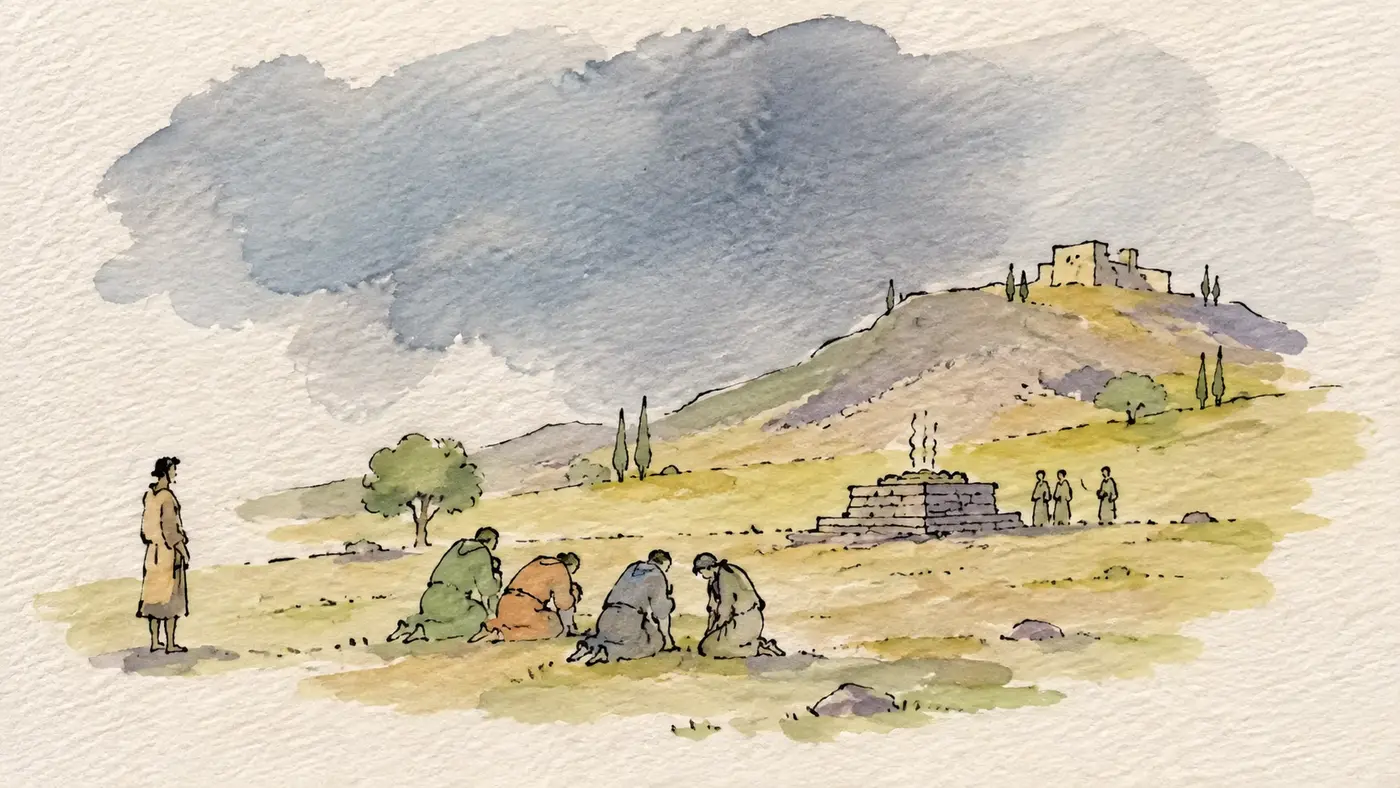
Although the Lord had given Israel the land, the conquest remained incomplete. Several tribes failed to drive out the inhabitants of their allotted territories. In some places the Canaanites proved difficult to dislodge; in others Israel grew strong enough to impose forced labour but still allowed them to remain.
At Bochim, the angel of the Lord confronted Israel’s disobedience: “You have not obeyed my voice. What is this you have done?” (Judges 2:2). Because Israel had not carried out what the Lord commanded, the remaining peoples would trouble them, and their gods would become a snare.
After Joshua and the elders of his generation died, “there arose another generation after them who did not know the LORD or the work that he had done for Israel” (Judges 2:10). The text does not describe in detail how this failure developed. What follows makes its practical meaning clear: the new generation abandoned the Lord and served the Baals and the Ashtaroth.
Judges then establishes its recurring pattern. Israel abandons the Lord, comes under oppression, cries out, and receives a deliverer whom God raises up. The victory is genuine and the land may rest for many years. After the judge dies, however, the people return to their former practices. The pattern produces an overall movement toward deeper disorder, although it also contains genuine acts of faith, decisive victories, and extended seasons of rest.
The First Deliverers
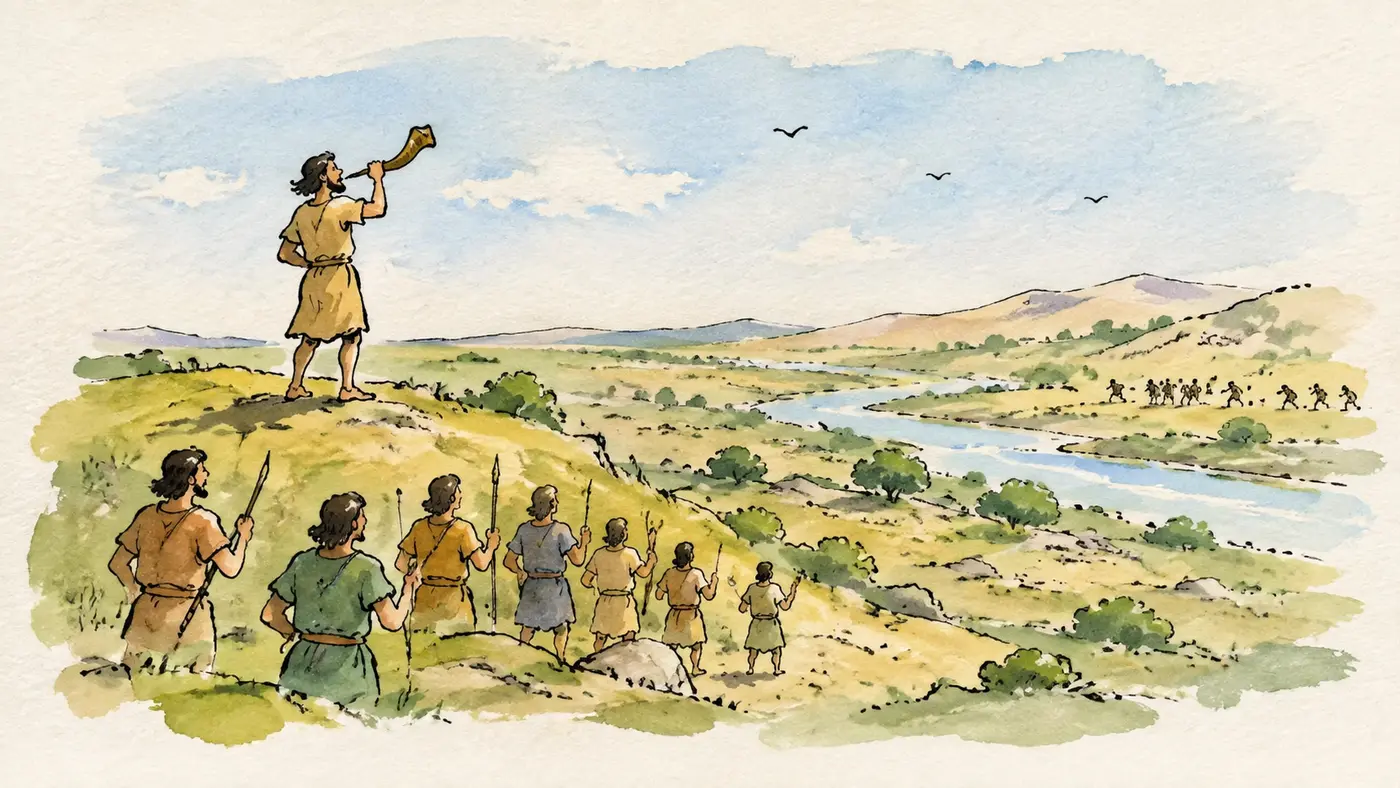
The first judge named in the cycle was Othniel. When Israel was subjected to Cushan-rishathaim, the people cried out to the Lord. The Spirit of the Lord came upon Othniel, he prevailed over Israel’s oppressor, and the land rested for forty years.
Israel then came under Eglon, king of Moab. For eighteen years the people served him. God raised Ehud, who killed the Moabite king and summoned Israel to battle. The Israelites seized the fords of the Jordan and struck down the Moabite forces. Moab was subdued, and the land rested for eighty years.
These periods of peace should not be passed over too quickly. Israel was not living in uninterrupted defeat, nor had God withdrawn his mercy. He heard the people’s cries, raised deliverers, defeated their enemies, and restored peace to the land. Nevertheless, even decades of rest did not produce permanent loyalty to the Lord.
Deborah and Barak
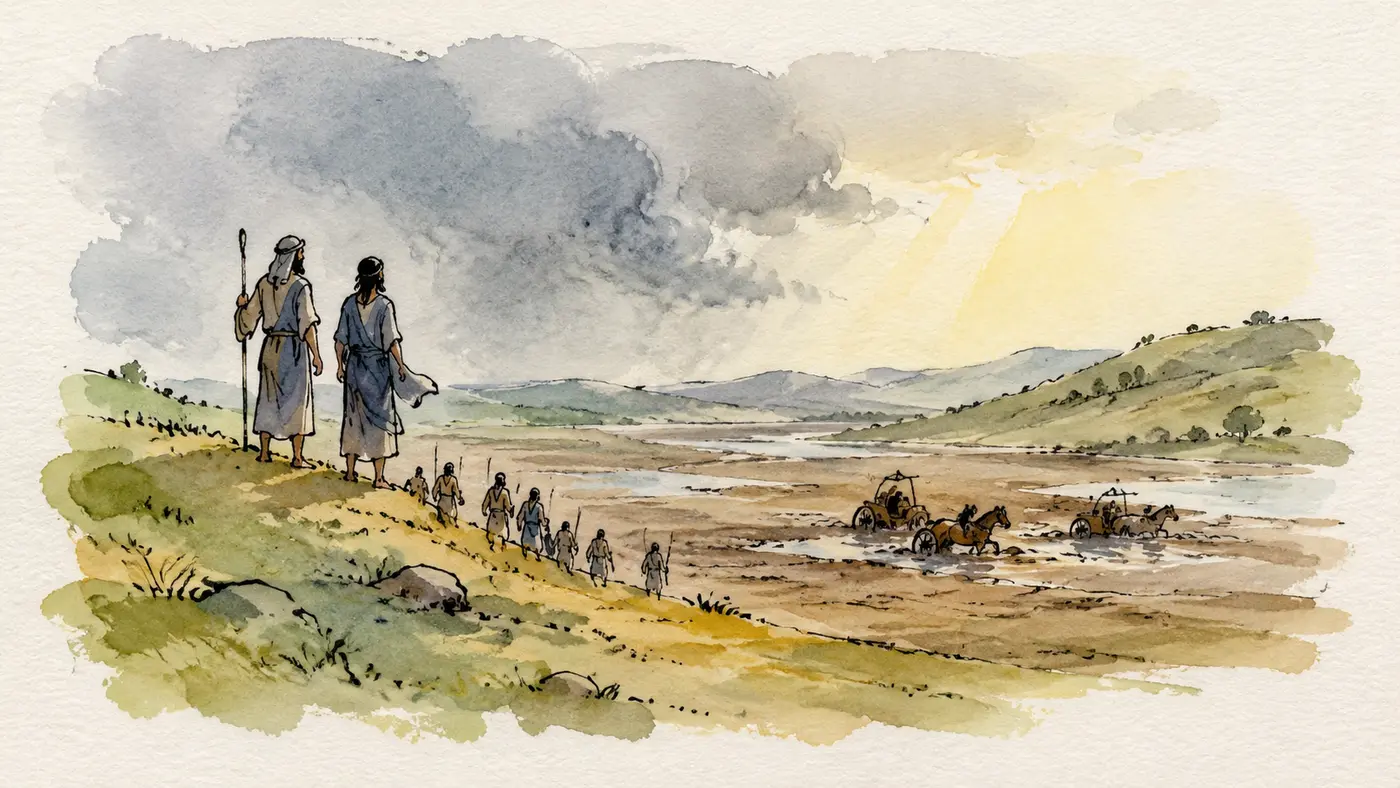
Under Jabin, king of Canaan, and Sisera, the commander of his army, Israel suffered for twenty years. Sisera’s nine hundred iron chariots represented a military strength Israel could not readily match. During this time Deborah judged Israel and spoke the word of the Lord. She summoned Barak and declared that God would give Sisera into his hand.
The Lord routed Sisera and his forces before Barak. Sisera abandoned his chariot and fled on foot to the tent of Jael, the wife of Heber the Kenite, expecting refuge because her household was at peace with Jabin. Jael welcomed him, concealed him beneath a covering, and killed him with a tent peg while he slept. The victory culminated in the Song of Deborah, which remembered the Lord marching before his people and celebrated those who willingly offered themselves for Israel.
The song also preserves a picture of the distress from which Israel had been delivered. Highways had been abandoned, travellers used hidden paths, and village life had ceased. Some tribes answered the call to battle, while others remained with their flocks or ships. Israel was not acting with complete unity, but several tribes gathered in response to the summons. Canaanite power was broken, and the land rested for forty years.
Gideon and Midian
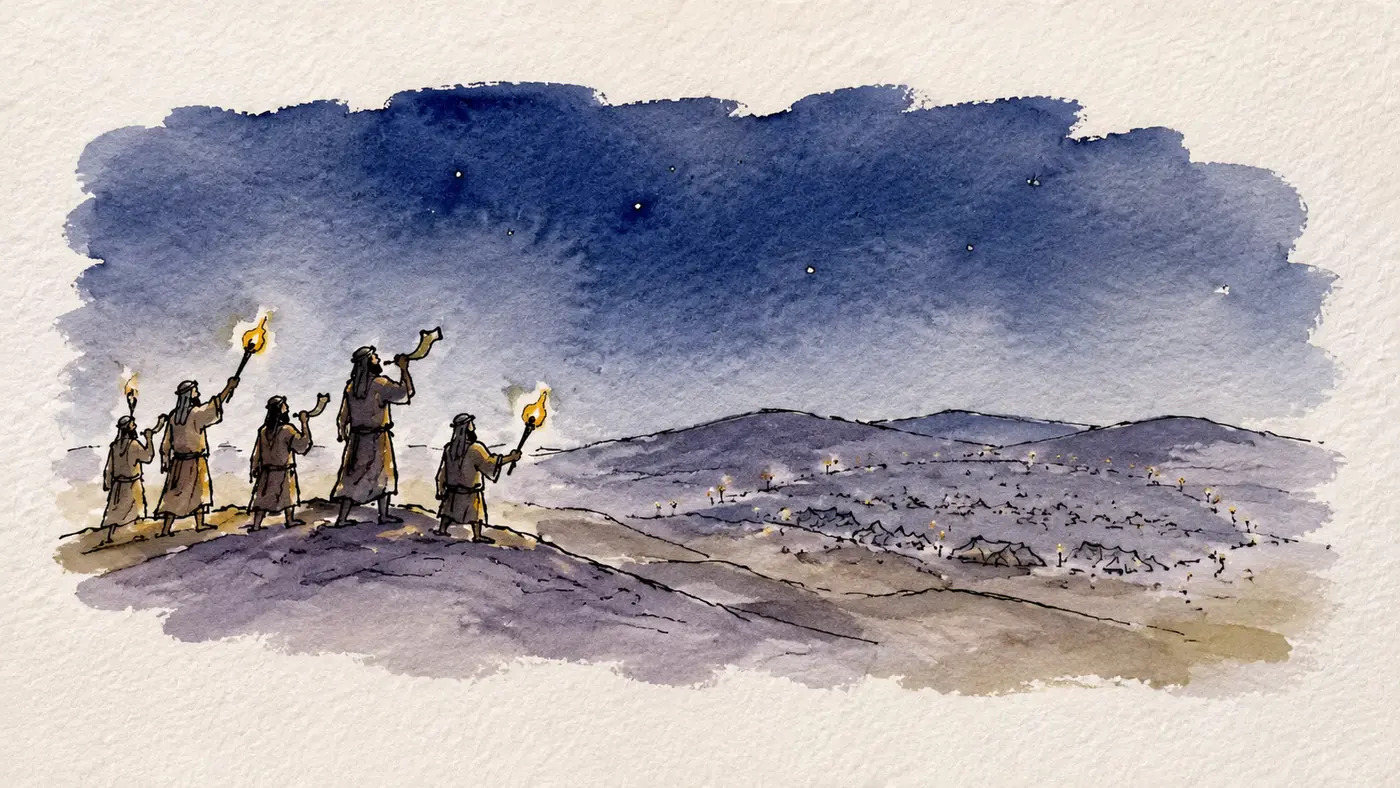
When Israel again did evil, Midianite raiders invaded the land at harvest time, destroying crops and taking livestock. The Israelites retreated into caves and mountain strongholds. Before sending deliverance, the Lord sent a prophet who recalled the exodus and identified Israel’s disobedience as the source of its distress.
Gideon was threshing wheat in a winepress when the angel of the Lord addressed him as a “mighty man of valor” (Judges 6:12). Before confronting Midian, Gideon was commanded to tear down his father’s altar to Baal. He acted at night because he was afraid, but he obeyed.
God then reduced Gideon’s army from thirty-two thousand men to three hundred so that Israel could not say, “My own hand has saved me” (Judges 7:2). Carrying trumpets, jars, and torches, the small force surrounded the Midianite camp. The Lord threw the enemy into confusion, and the invading coalition was broken. Midian was subdued, and the land rested for forty years during Gideon’s lifetime.
After the victory, the Israelites asked Gideon to rule over them and establish his family as a dynasty: “Rule over us, you and your son and your grandson also” (Judges 8:22). Gideon refused the title, declaring that neither he nor his son would rule over Israel because “the LORD will rule over you” (Judges 8:23). His answer preserved the principle that Israel already had a King.
Gideon’s later failures do not make the victory unreal, but they leave tension between his declaration and what followed. He accumulated considerable wealth, took many wives, and named one of his sons Abimelech, a name that can mean “my father is king.” He also made an ephod from gold taken after the battle, and Israel treated it as an object of unfaithful worship. Gideon rejected hereditary rule in words, yet elements of his household began to resemble a royal establishment. His story reveals why victory alone could not heal the nation.
Victory and Fracture
After Gideon’s death, his son Abimelech appealed to his mother’s relatives in Shechem. He asked whether they would rather be ruled by all seventy of Gideon’s sons or by one man who belonged to their own family. With their support, he killed his brothers and had himself proclaimed king at Shechem; only Jotham escaped. Abimelech seized power through violence and governed amid conflict until both he and the city that supported him came under judgment. Israel needed leadership, but Abimelech showed that not every form of kingship would answer that need.
The conflict with Ammon later brought Jephthah to prominence. Rejected by his brothers and driven from his father’s household, he was sought by the elders of Gilead when war came. The Spirit of the Lord came upon him, and the Lord gave the Ammonites into his hand. Twenty towns were struck, and the threat was subdued.
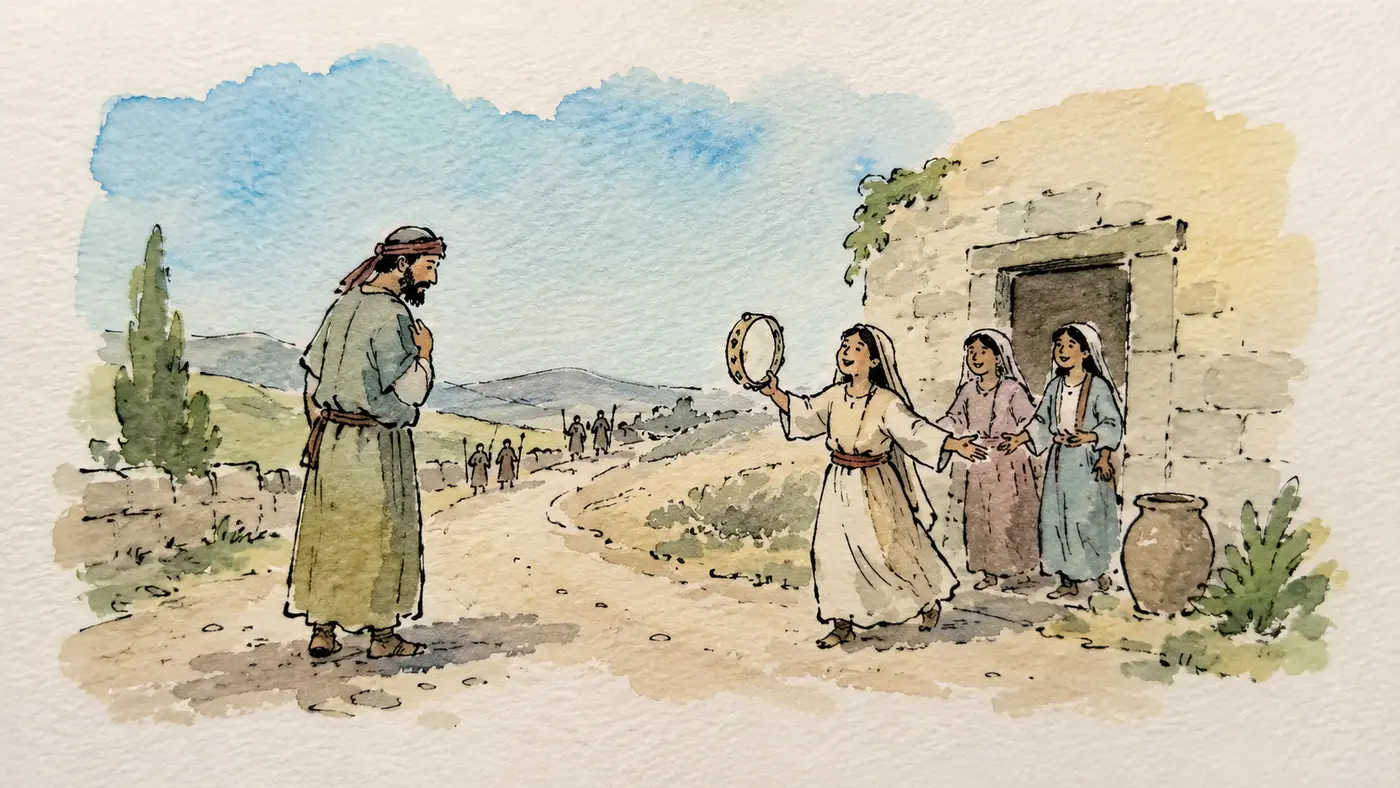
Before the battle, Jephthah vowed that if the Lord gave him victory, whatever came out from the doors of his house to meet him would belong to the Lord, and he would offer it as a burnt offering. When he returned home, his only daughter came out to greet him with tambourines and dancing. The victory over Ammon was therefore followed by personal catastrophe.
The narrative states that Jephthah did with her according to his vow but has produced disagreement over whether this describes her death or lifelong dedication. What is unambiguous is that the vow was Jephthah’s own undertaking, not something God commanded. Soon afterward, conflict with Ephraim ended in the deaths of thousands of Israelites. Jephthah had defeated an external enemy, but his victory did not restore unity within Israel.
Samson and the Philistines
Before Samson’s birth, the angel of the Lord announced that he would “begin to save Israel from the hand of the Philistines” (Judges 13:5). The wording is significant. Samson’s work would be a beginning rather than a complete deliverance.
The Spirit of the Lord repeatedly empowered him, yet Samson was also driven by appetite, anger, and personal vengeance. His conflicts often arose from private grievances rather than an attempt to gather and lead Israel. The people themselves appear to have accepted Philistine rule as a settled condition. When the Philistines came looking for Samson, three thousand men of Judah bound him and handed him over.
Samson’s downfall came through Delilah, whom the Philistine rulers paid to discover the source of his strength. After repeated questioning, Samson disclosed the sign of his Nazirite consecration: his hair had never been cut. While he slept, his hair was removed, and the Philistines seized and blinded him. His strength had never resided magically in his hair. The deeper tragedy was that “the LORD had left him” (Judges 16:20).
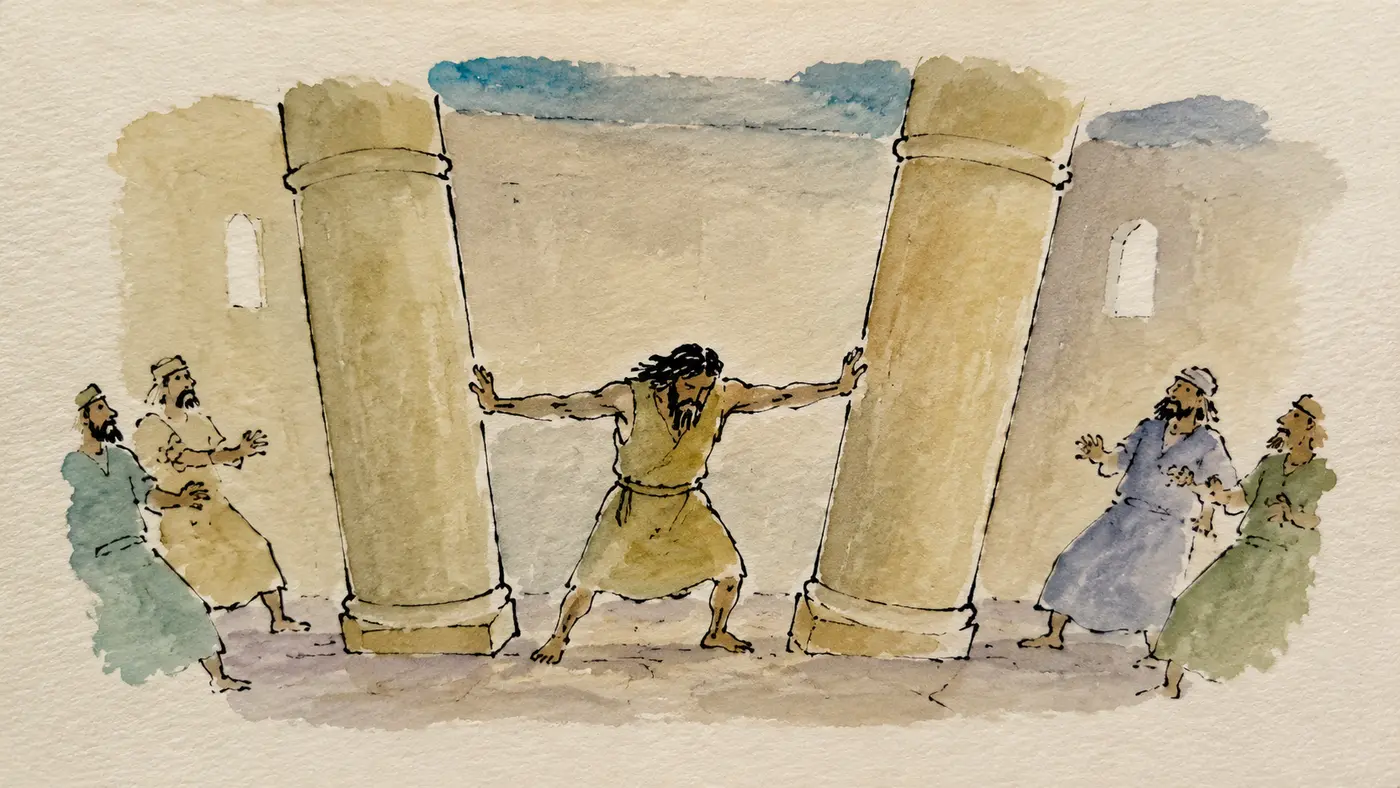
Samson’s final victory came through his death. Blinded and imprisoned, he was taken to the temple of Dagon so that the Philistine rulers and gathered crowds could celebrate his capture. There he called upon the Lord and brought down the supporting pillars. He killed more Philistines in his death than during his life. His actions fulfilled the announced beginning of deliverance, but he never united the tribes or brought Philistine domination to an end.
Israel Unravels
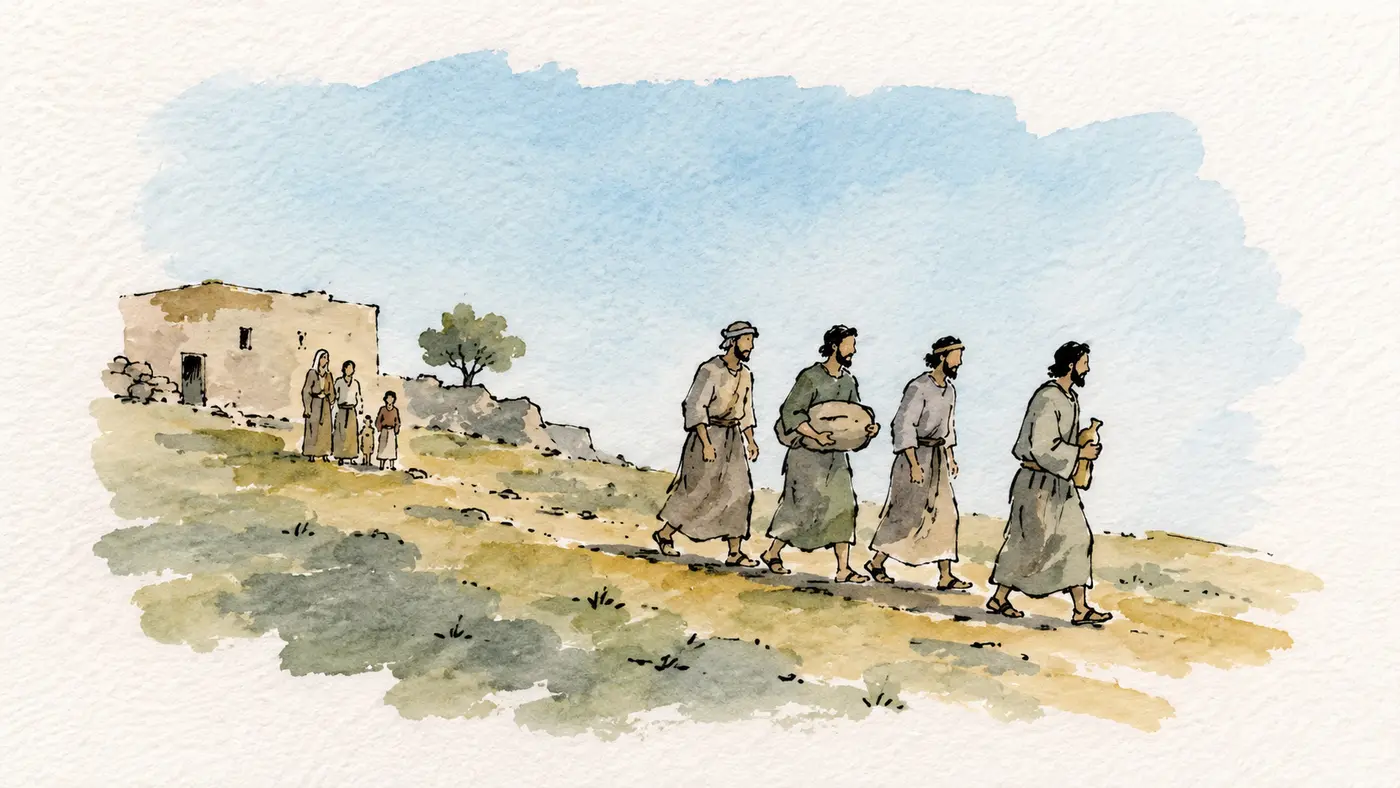
The concluding narratives of Judges reveal how deeply the crisis had entered Israel itself. Micah established a private shrine, fashioned an image, and appointed first his son and then a wandering Levite as priest. Members of Dan later stole the objects of worship and the priest and established this irregular worship for themselves.
The language of Israel’s faith remained present, but its practice had become distorted. Priests, sacred objects, divine guidance, and the name of the Lord were combined with arrangements contrary to his commands. The people had not ceased to be religious. They practised religion according to what appeared right in their own eyes.
The abuse and death of a Levite’s concubine at Gibeah then brought the tribes together in outrage. They demanded that Benjamin surrender the men of Gibeah who had committed the crime, but Benjamin refused and gathered instead to defend the city. The attempt to judge one atrocity therefore became a civil war that nearly destroyed Benjamin. The measures later adopted to preserve the tribe repeated the coercion and violence the assembly had gathered to condemn. Israel was no longer merely vulnerable to enemies outside its borders. It was disintegrating from within.
Judges does not provide enough information to reconstruct a complete year-by-year sequence. The reference to Phinehas in the Gibeah account may point to an early setting, but the exact chronology cannot be established. Placed at the end, these stories interpret the character of the age: “Everyone did what was right in his own eyes” (Judges 21:25).
Shiloh, Samuel, and Ichabod
Eventually the corruption visible throughout the land reached Shiloh itself. Eli’s sons treated the Lord’s offerings with contempt and abused their position. Into this setting came Samuel. He grew up at Shiloh while “the word of the LORD was rare in those days” (1 Samuel 3:1). Then the Lord called Samuel and established him as a prophet.
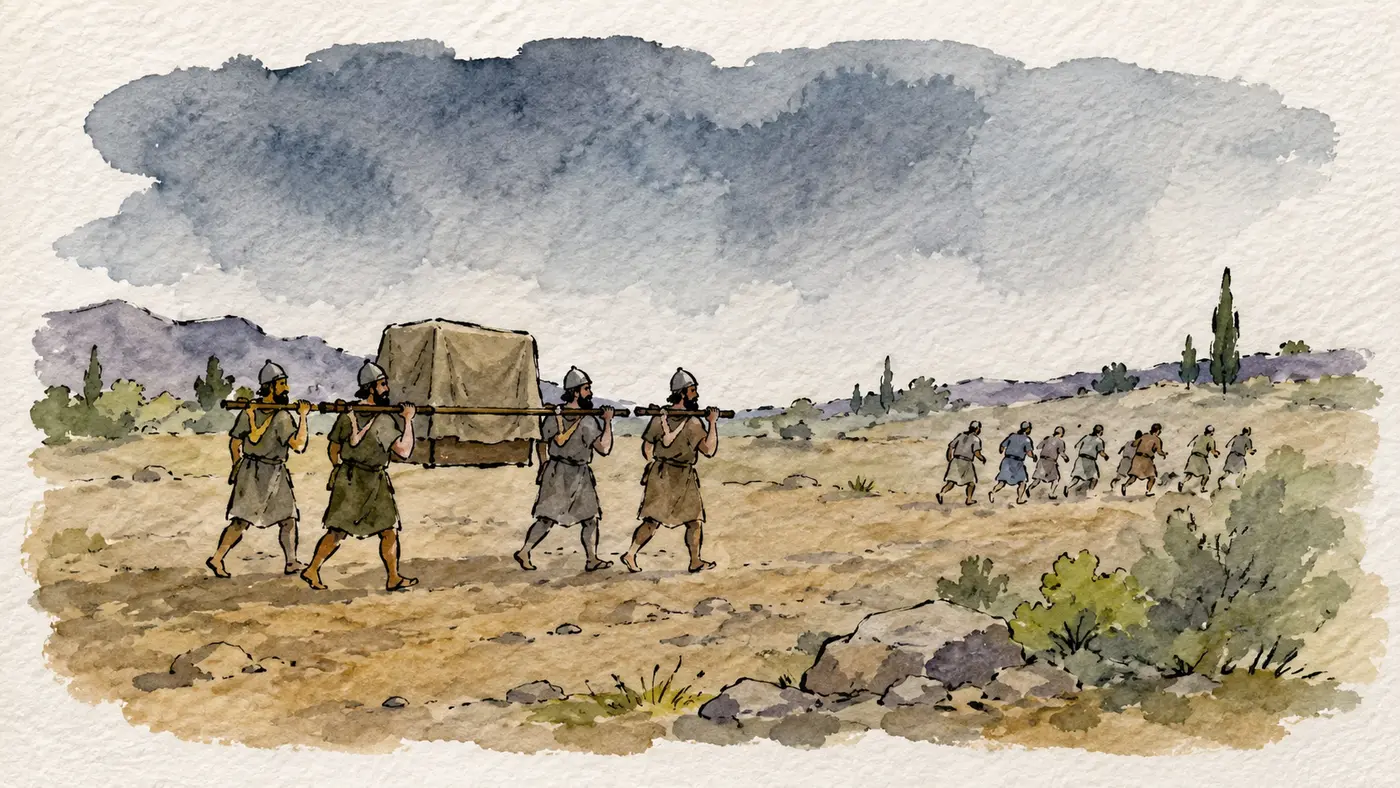
After defeat by the Philistines, Israel’s elders brought the ark from Shiloh into the camp, assuming that its presence would secure victory. But the symbol of God’s throne could not be used to place God under Israel’s control. The Philistines defeated Israel, Eli’s sons were killed, and the ark was captured.
When Eli heard the news, he fell and died. His daughter-in-law named her son Ichabod, saying, “The glory has departed from Israel” (1 Samuel 4:21). Shiloh became a warning that sacred institutions could not protect an unfaithful people from judgment.
Yet the capture of the ark did not mean that the Lord had been defeated. In Philistine territory, Dagon fell before it, and judgment followed wherever the ark was taken. Israel had failed, but the Lord had not. He required neither Israel’s army nor its institutions to defend his glory.
The King Israel Asked For
Under Samuel, Israel removed the Baals and Ashtaroth, gathered at Mizpah, confessed its sin, and sought the Lord. When the Philistines attacked, Samuel cried out and the Lord answered. Samuel raised a stone called Ebenezer, saying, “Till now the LORD has helped us” (1 Samuel 7:12).
As Samuel grew old, he appointed his sons as judges, but they did not follow his example. They pursued dishonest gain, accepted bribes, and perverted justice. Their corruption gave the elders a legitimate grievance against the existing leadership. They therefore asked for a king “to judge us like all the nations” (1 Samuel 8:5). The request for a human king was not wrong in itself; Deuteronomy had anticipated monarchy. The deeper problem lay in the kind of kingship Israel desired and the confidence the people placed in it. The Lord said, “They have not rejected you, but they have rejected me from being king over them” (1 Samuel 8:7).
Saul embodied much of what Israel expected. He was physically impressive, capable of rallying the tribes, and successful in battle. His reign began with real promise. Yet at Gilgal he failed to wait for Samuel as commanded. Later he spared King Agag and the best of Amalek’s livestock, attempting to present the preserved animals as an offering.
Samuel answered, “To obey is better than sacrifice” (1 Samuel 15:22). Saul admitted that he had feared the people and obeyed their voice. The king who should have led the nation under the word of the Lord had allowed the desires of the people to govern him. Israel’s need could not be met merely by placing a powerful man on the throne.
David and the Enduring House
David was not selected because he appeared more royal than Saul. God chose Jesse’s youngest son, a shepherd, reminding Samuel that “man looks on the outward appearance, but the LORD looks on the heart” (1 Samuel 16:7). David entered Saul’s service and defeated Goliath in the name of the Lord. As his victories brought him public acclaim, however, Saul became jealous and began to regard him as a threat to the throne. He tried to strike David with a spear, plotted to have him killed in battle, and eventually ordered his servants and Jonathan to put him to death. David escaped from the royal court and spent years moving through the wilderness while Saul pursued him with armed men.
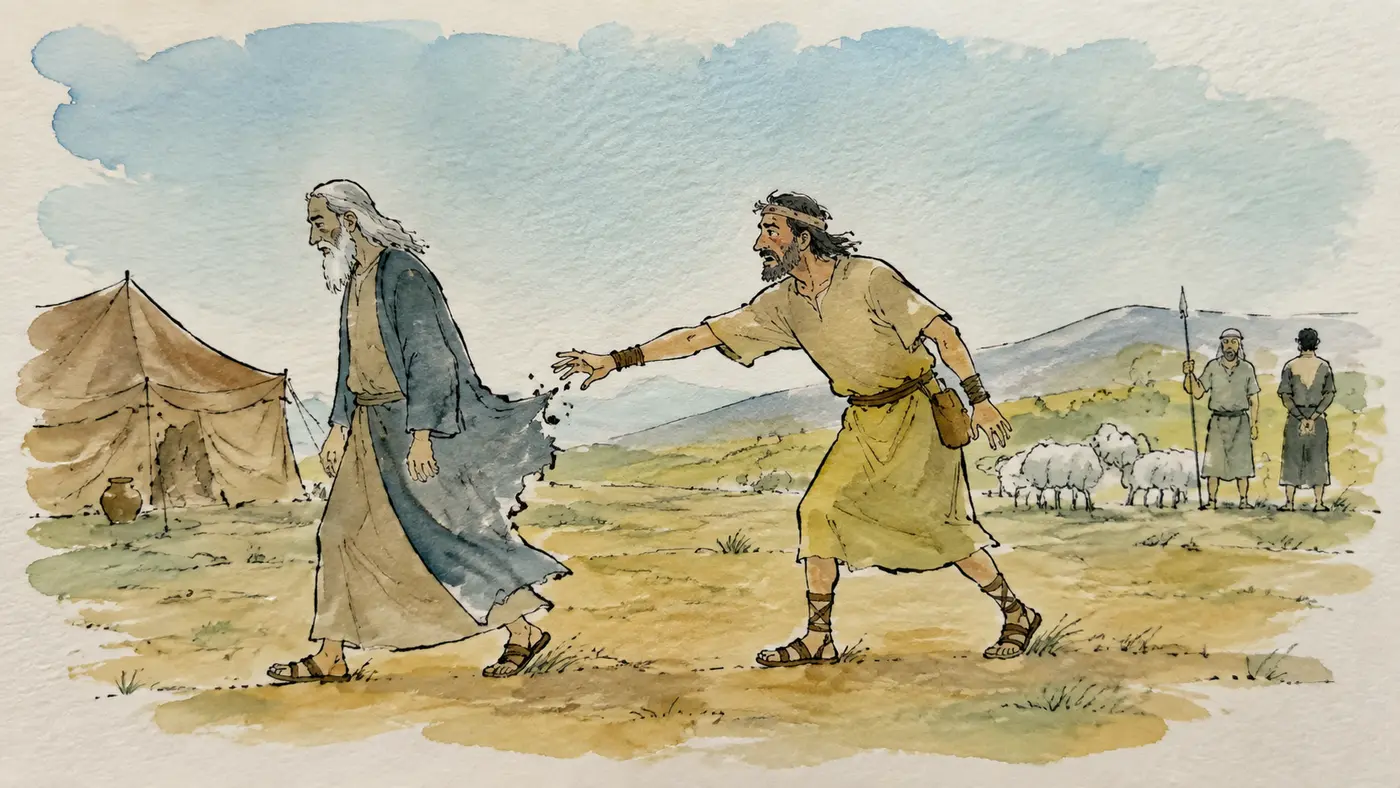
That pursuit explains the opportunities David later had to kill Saul. In a cave near Engedi, Saul entered unaware that David and his men were hiding inside. David cut off a corner of Saul’s robe but refused to take his life (1 Samuel 24:1–7). Later David entered Saul’s camp at night and found him asleep with his spear beside him. Again David restrained his companion and left Saul unharmed (1 Samuel 26:6–12). In both episodes David refused to seize the throne by violence against “the LORD’s anointed.” He waited for God to remove Saul and fulfil the promise in his own time.
After Saul’s death, David became king over Judah and established his court at Hebron. The kingdom did not immediately unite around him. For several years much of Israel remained aligned with Saul’s house under his surviving son Ish-bosheth, supported by Saul’s commander Abner. Conflict continued until both Ish-bosheth and Abner were killed. David did not order either death and publicly condemned the men responsible.
The elders of all Israel then came to David at Hebron. They acknowledged both their kinship with him and the Lord’s earlier word concerning his calling: “You shall be shepherd of my people Israel” (2 Samuel 5:2). David was anointed king over all Israel, bringing the tribes under one throne.
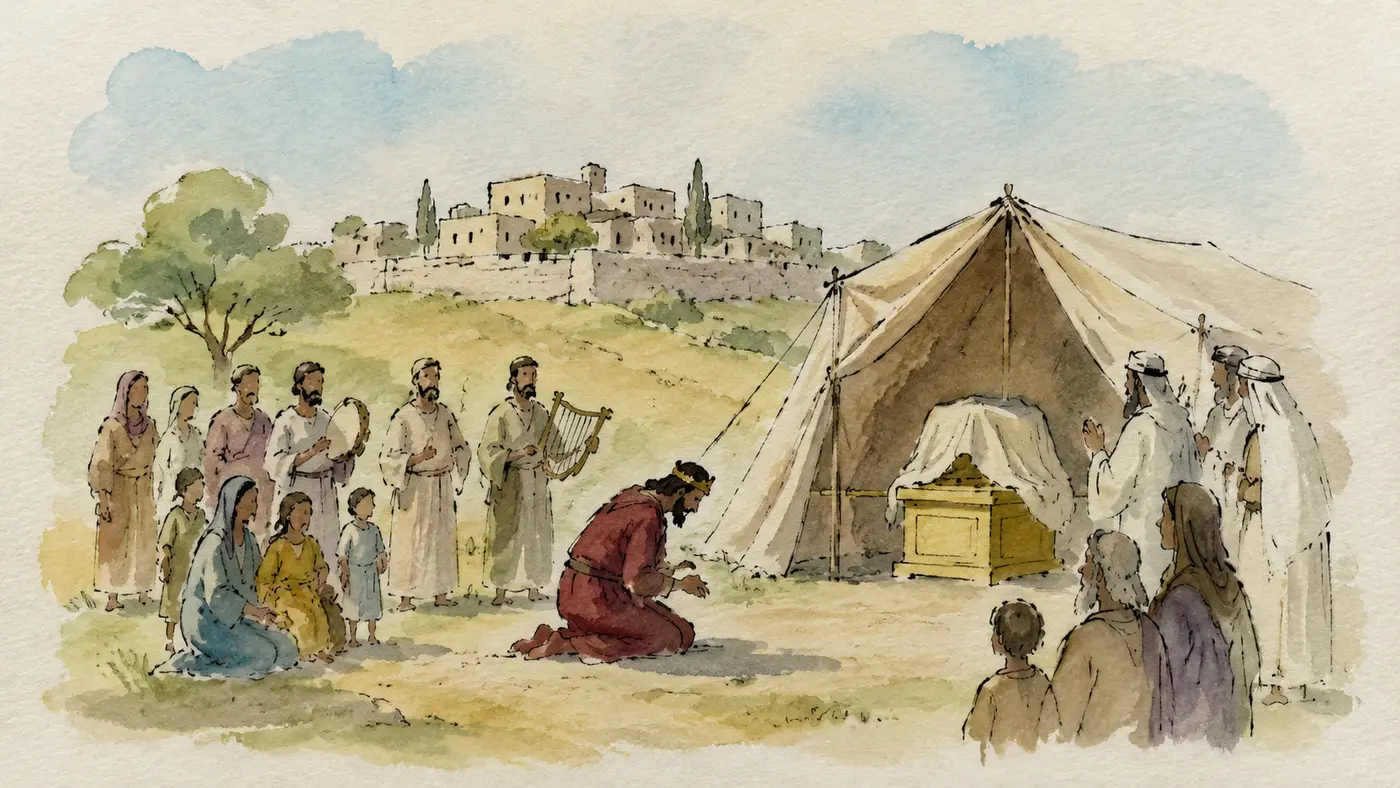
David captured Jerusalem, made it the centre of his reign, and later brought the ark into the city. The narrative thus brought the Davidic throne and the visible sign of the Lord’s presence into close relation while maintaining the distinction between them. David reigned as king, but the Lord remained the God before whom David worshipped.
When David proposed to build a house for the Lord, God first promised to build a house for David. The word shifted from a temple to a dynasty: “Your house and your kingdom shall be made sure forever before me. Your throne shall be established forever” (2 Samuel 7:16).
David’s accession did not mark the beginning of the Lord’s reign over Israel. It gave Israel a human throne within that prior divine kingship. The covenant of 2 Samuel 7 bound the future of the kingdom to David’s house, while leaving the Davidic king himself under the authority of the Lord.
Israel now had a king, but that king stood beneath the King.
Scripture quotations are from the ESV® Bible (The Holy Bible, English Standard Version®).